Where human intuition meets AI-powered sound.
Powered By

The Future of Dance Music Starts Here
Shaping the Future of Electronic MusicEDM-AI exists to explore the intersection of artificial intelligence and electronic music culture.If you're experimenting with AI workflows, redefining production methods or challenging what “authentic” means in the modern era — we want to hear from you.Register below for Teknika Records - interviews, features, submissions and collaboration opportunities.Powered by Teknika Records.
Play Now>>>>
EDM + AI
Exploring the evolution of electronic music through artificial intelligence and club culture.Electronic music has always evolved alongside technology.From drum machines and samplers to DAWs and digital distribution, every major shift in dance music history has been powered by new tools. What once felt controversial — using sequencers, software synths, even laptops in DJ booths — eventually became standard. Innovation isn’t separate from electronic music culture. It is the culture.Artificial intelligence is simply the next chapter.But unlike past tools, AI doesn’t just process sound — it can generate ideas. Rhythms. Melodies. Full arrangements. It can suggest variations at scale, explore sonic directions instantly, and surface combinations that might never emerge through traditional workflows. That speed and breadth of experimentation fundamentally changes how producers approach creativity.Still, the dancefloor remains the ultimate filter.In club culture, theory means nothing if the groove doesn’t land. A track isn’t validated by how it was made — it’s validated by movement. By tension and release. By the way a bassline locks a room into rhythm at 1:30am.This is where the conversation becomes interesting.AI can generate.
But humans curate.
AI can explore.
But humans decide.The real power of EDM + AI isn’t automation — it’s acceleration. It’s the ability to test more ideas, refine faster, and push stylistic boundaries without losing the emotional intelligence that makes dance music resonate in a physical space.Critics often frame AI in music as replacement. In reality, it behaves more like amplification. The producers who will thrive in this era aren’t those who resist it — and not those who rely on it blindly — but those who understand how to shape it. To guide it. To select what works and discard what doesn’t.Club culture has always rewarded innovation. The underground especially has a history of adopting new technologies early — from hardware revolutions to digital DJing. AI production tools are following the same trajectory. Experimental today. Normal tomorrow.The important question isn’t whether AI belongs in electronic music.It’s how intentionally it’s used.Used lazily, it produces generic output.
Used strategically, it unlocks creative range at a scale never seen before.EDM + AI isn’t about removing the human element. It’s about redefining where human value sits — less in manual construction, more in taste, direction, aesthetic judgment, and emotional intelligence.In the coming years, we’ll likely see:AI-native producers emergingHybrid workflows becoming standardLabels positioning around AI-driven identityDJs testing and validating AI-assisted tracks in clubsEntire subgenres shaped by algorithmic experimentationAs with every technological shift in electronic music, resistance will fade. What remains will be what always mattered: the experience.The lights.
The low-end pressure.
The shared moment on the floor.EDM + AI is not the end of creativity. It’s an expansion of the toolkit.And as always in dance music, the final verdict doesn’t happen online.It happens in the club.
AI-Driven Dance Culture
Production. Philosophy. Dancefloor impact.Electronic music has never stood still.From analog drum machines to digital workstations, from vinyl to streaming, every era of dance culture has been shaped by technology. Tools evolve — and with them, sound evolves. Artificial intelligence is not an interruption to this pattern. It’s the next acceleration.AI-driven dance culture begins in production, but it doesn’t end there.On the production side, AI introduces scale. It can generate rhythmic variations in seconds, sketch harmonic frameworks instantly, and explore stylistic hybrids that would take days to map out manually. For producers, this shifts the creative bottleneck. Time spent building from scratch becomes time spent selecting, refining, and directing.The role changes from constructor to curator.But this shift raises deeper philosophical questions.What defines authorship when ideas are generated collaboratively with a machine?
Where does creativity sit — in the prompt, the selection, the edit, the final arrangement?
Does efficiency dilute artistry, or does it free artists to focus on higher-level expression?Dance music has always blurred authorship. Sampling recontextualized existing recordings. Remix culture built entire careers on reinterpretation. DJing itself is the art of sequencing other people’s work into new experiences. AI-driven production sits comfortably within that lineage — another layer in a long history of recombination and reinvention.What matters most, as always, is impact.A track’s origin story disappears the moment the kick drops in a dark room. The dancefloor is indifferent to workflow. It responds to tension, groove, dynamics, and emotional timing. If an AI-assisted bassline locks into the crowd and drives momentum forward, its method of creation becomes secondary to its physical effect.This is the defining principle of AI-driven dance culture:The dancefloor is the filter.Used carelessly, AI can produce endless generic output. Used intentionally, it becomes an engine for exploration — allowing producers to test more ideas, discard faster, and refine toward something sharper. It rewards those with taste. Those with instinct. Those who understand how a club breathes.The philosophy, then, is not about automation replacing artistry. It’s about redistribution of effort.Less time drawing MIDI notes.
More time shaping identity.
Less repetition.
More direction.As AI tools mature, we’ll likely see hybrid workflows become standard. Producers guiding generative systems. DJs road-testing AI-assisted tracks in real environments. Labels defining themselves around technological fluency as much as genre.Some will resist. That’s natural. Every technological shift in electronic music has met skepticism. But culture adapts. It always has.AI-driven dance culture is not about novelty. It’s about leverage.Production becomes faster.
Philosophy becomes sharper.
Impact remains the ultimate measure.Because no matter how advanced the tools become, the mission of dance music doesn’t change:Create sound that moves people — physically, emotionally, collectively.The future of club culture won’t be defined by whether AI is used.It will be defined by who uses it well.
Inside the AI Music Movement
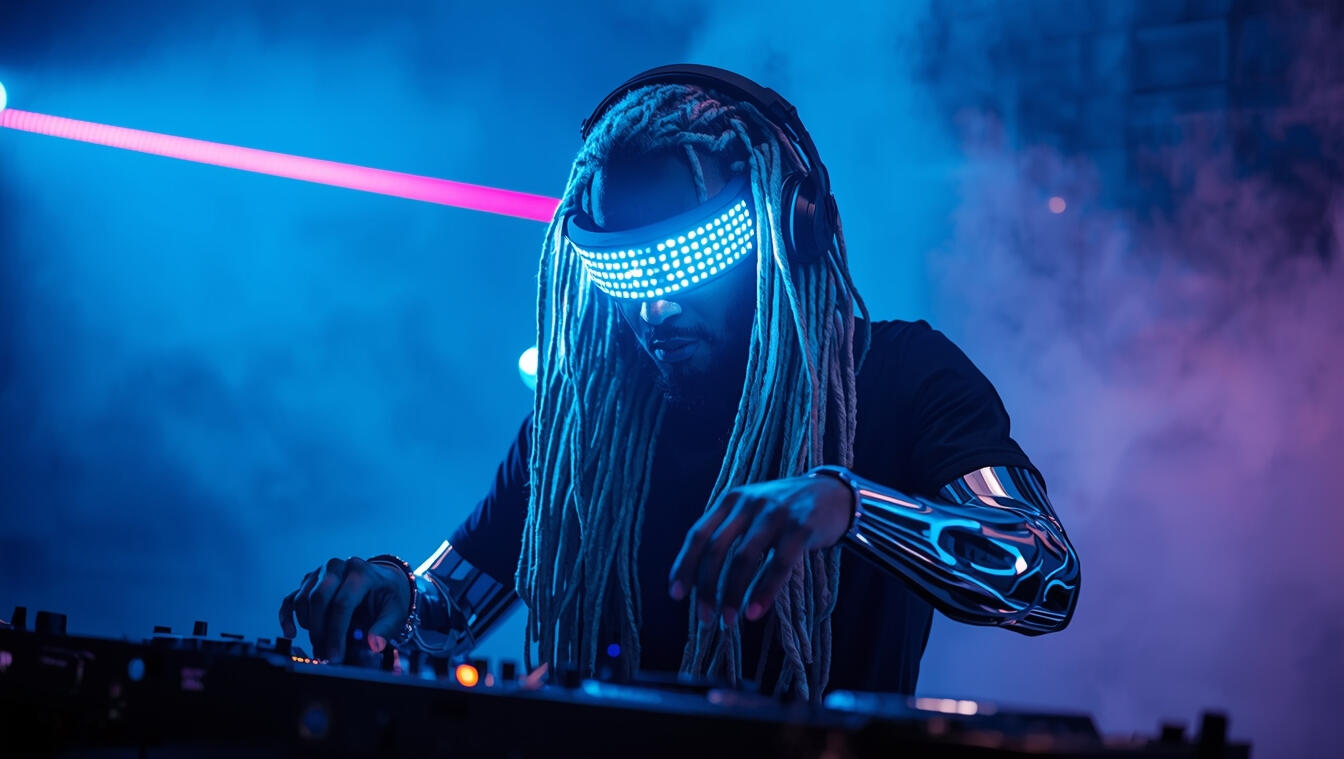
Serious conversations about the next era of electronic sound.Artificial intelligence in music is no longer a novelty headline. It’s a developing movement.What started as experimental demos and curiosity-driven projects is quickly evolving into a new layer of electronic culture. Producers are integrating AI into their workflows. Labels are exploring AI-assisted catalogues. DJs are testing AI-generated tracks in real club environments. The shift isn’t hypothetical — it’s happening.But beyond the surface excitement, deeper conversations need to take place.Inside the AI music movement, the focus isn’t just on what technology can do. It’s about what it should do — and how it reshapes the creative ecosystem of electronic sound.AI introduces speed.
It introduces scale.
It introduces unexpected combinations.What it doesn’t introduce is taste.That remains human.This is where the real discussion begins. If AI can generate melodies, rhythms, textures, and even full arrangements, the producer’s role evolves. Creativity moves from manual construction toward direction, selection, refinement, and identity building. The question shifts from “Can you build it?” to “Can you shape it into something meaningful?”Electronic music has always embraced technological evolution. Synthesizers were once controversial. Sampling was once criticized. Digital DJing was once dismissed. Each time, culture adjusted — and innovation expanded the artform rather than replacing it.AI is following that same trajectory.The movement isn’t about replacing musicians. It’s about redefining creative leverage. Used blindly, AI can flood the ecosystem with generic output. Used intentionally, it can unlock stylistic hybrids, accelerate experimentation, and challenge traditional genre boundaries.There are valid concerns. Authorship. Originality. Oversaturation. Ethical training data. These are conversations worth having — and avoiding them weakens the movement rather than strengthens it.Serious engagement builds credibility.Inside the AI music movement, the most important voices won’t be the loudest evangelists or the harshest critics. They will be the practitioners who demonstrate results — tracks that work in real-world contexts, releases that resonate with listeners, sets that move crowds.Because in electronic music, theory always meets reality on the dancefloor.If AI-assisted production leads to stronger grooves, deeper atmospheres, and more innovative structures, it will earn its place organically. If it doesn’t, culture will filter it out.That’s the beauty of club music. It self-regulates through experience.We are entering an era where artificial intelligence is part of the toolkit. Not the identity. Not the replacement. The toolkit.Inside this movement, the goal isn’t hype. It’s evolution.Electronic sound has always been shaped by the machines we build. Now those machines are learning from us. The next era won’t be defined by resistance or blind adoption — it will be defined by how thoughtfully we engage with the tools in front of us.The conversation has started.The results will speak in the club.